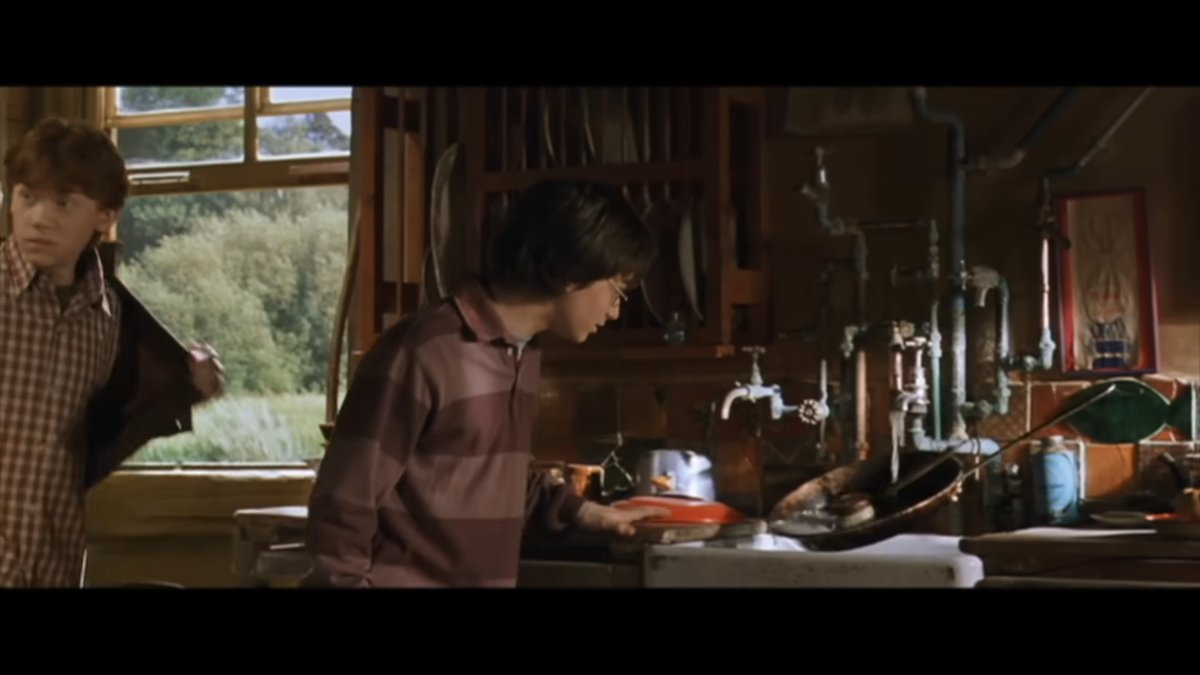
BEDROCK
Bedrock gives the work weight, continuity and trust by creating a stable referential field that can be accepted, assimilated and largely forgotten.
Without Bedrock, the work cannot hold its own weight.
Bedrock is the integrated and integrating part of a story.
It is what the audience has stopped needing to solve.
A world can contain impossible technology, strange rituals, unfamiliar social rules, absurd physics or deeply unusual people. None of that prevents Bedrock from forming. What matters is whether enough of the material becomes coherent and predictable enough for the audience to carry it forward as part of its working model.
Bedrock is what lets us say, consciously or not:
This is how things are here.
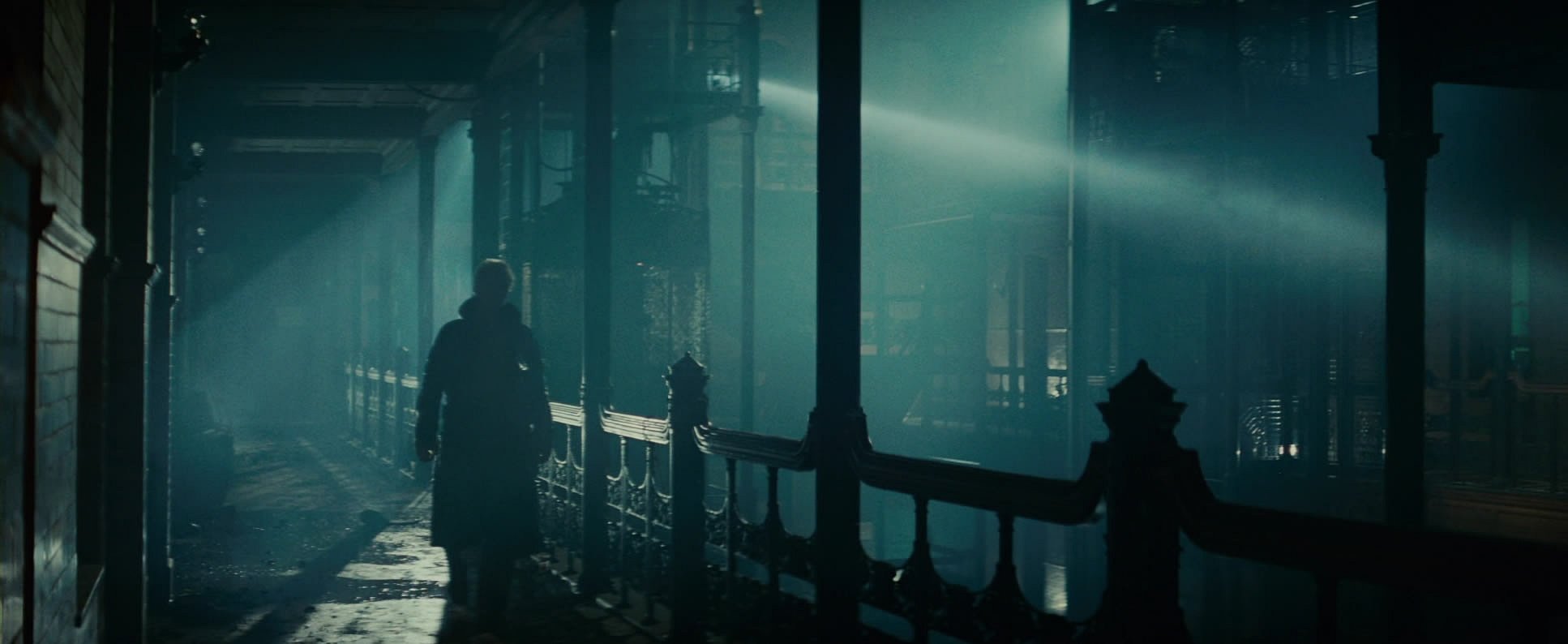
Bedrock: Blade Runner
Blade Runner works almost in the opposite direction.
Rain, darkness, smoke, neon, industrial machinery, crowded streets, strange architecture, linguistic mixtures and a pervasive noir atmosphere are present so constantly that they cease to feel like isolated details. They become the field in which the story exists.
We still notice them, but we also stop noticing them. They are assimilated. The world acquires a strange tonal weight without needing to continually explain itself. The atmosphere acts on us before we consciously catalogue every piece of it.
That is Bedrock. The repeated environmental information becomes something we trust and inhabit. It gives the world continuity, mass and mood, then recedes enough for the story to happen inside it.
The mind does not want to recompute everything
We do not experience a story by rebuilding the entire world from zero every second.
We preserve assumptions.
We infer patterns.
We group repeated information.
We stop spending attention on things that have become stable enough to trust.
This is one of the central functions of Bedrock.
A few signals can be enough to calibrate a model. If later information keeps confirming that model rather than forcing us to replace it, the model becomes cheaper to carry.
A character lies in one scene. Then again. Then casually lies in a third. Eventually we stop asking whether this person lies.
We simply know that they do.
A social group behaves brutally. The first exchange surprises us. The second confirms a pattern. Soon we understand the temperature of the room before anyone opens their mouth.
The work has compressed.
Coherence makes Bedrock possible
Repetition alone is not enough.
If a story repeats incoherent information, the result may simply remain confusing.
Something becomes easy to integrate when enough of its signals point in the same direction.
That coherence can be mechanical.
It can also be tonal.
It can be social, aesthetic, behavioral, emotional, mystical, procedural or almost impossible to articulate.
Sometimes a world makes sense before we can explain why it makes sense.
That is often Bedrock doing its work.
Rain
Imagine it is raining.
The first exterior scene establishes it.
The next exterior scene is also wet.
Then we move inside a shop and still hear the rain.
Then deeper into the building, where the sound becomes faint.
Then into a basement, where we cannot hear it at all.
We may still assume it is raining outside.
The rain has left perception without leaving the model.
That is Bedrock.
Bedrock can persist beyond direct perception as a maintained assumption.
The story has set a value, and unless something gives us a reason to update it, we carry that value forward.
Cut outside and show clear skies, and the model changes.
Until then, the rain remains part of the world.